Affiliate marketing is the business model that changed my life, and it can change yours too. At its core, affiliate marketing is simple: you match products and services with the people who need them, and you earn a commission for making that connection. It is how I built my internet business working late nights after my day job, and it is still one of the best ways to start making money online in 2026.
This guide is the starting point for everything you need to know about building a successful affiliate marketing business. Whether you are brand new to online business or looking to add affiliate income to your existing content, this roadmap will show you the way.
What Is Affiliate Marketing?
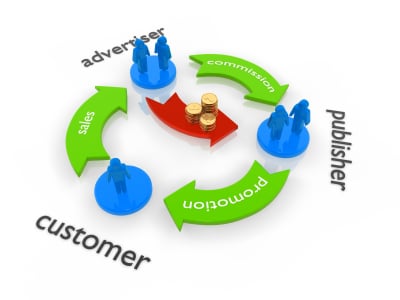
Affiliate marketing is a business model where you promote other companies' products on your website, blog, podcast, or social media channels. When someone clicks your unique affiliate link and makes a purchase (or completes another qualifying action), you earn a commission.
Think of it like this: when a friend asks you which streaming service you recommend and you tell them about yours, and they sign up, affiliate marketing is what happens when you get paid for that recommendation. Companies like Amazon, Target, and thousands of smaller businesses run affiliate programs because it is a cost-effective way to acquire new customers.
Affiliate marketing is now an $18.5 billion industry globally, and it continues to grow year over year. The opportunity is real, but it requires real work.
The Four Steps to Affiliate Marketing Success
Step 1: Choose Your Niche
Your niche is the specific topic your business will focus on. My first recommendation is to pick a niche that is profitable. Search for your topic on Google. If you see ads running on the search results page, that means businesses are making money in that space. Where there are ads, there is revenue.
My second recommendation is to choose something you genuinely care about. Building an affiliate site takes months of work before you see results. If you are passionate about the topic, or at least genuinely interested in it, you will be able to push through the inevitable difficult stretches. If you pick a niche solely for the money, you will likely quit before you see returns.
The sweet spot is a topic that has commercial demand, that you find interesting, and where you can demonstrate real experience or expertise. Google's E-E-A-T guidelines (Experience, Expertise, Authoritativeness, and Trustworthiness) mean that content creators who demonstrate genuine personal experience with their topic rank better in search results.
Step 2: Build Your Website
You need a home base on the internet, and for most affiliate marketers, that means a website built on WordPress. The barrier to entry has never been lower. You can have a professional website up and running for under $20 in hosting costs and about an hour of setup time.
Here is what you need:
- A domain name from a registrar like Namecheap or Cloudflare ($10-15/year)
- Web hosting from a provider like Cloudways, SiteGround, or Bluehost ($5-30/month)
- WordPress installed (one-click install included with all modern hosting)
- A clean theme like Astra, GeneratePress, or Kadence
- Essential plugins: RankMath or Yoast SEO, a caching plugin, and ThirstyAffiliates for link management
Once your site is set up, you will add helpful content about your niche and include affiliate links to relevant products. Visitors will find your content through search engines, read your recommendations, click through to the merchant, and you earn commissions on qualifying purchases.
Step 3: Drive Traffic
You cannot sell anything without an audience. The primary traffic source for most affiliate marketers is organic search traffic from Google. This means creating content that ranks in search results for terms your target audience is searching for.
Search engine optimization (SEO) in 2026 is fundamentally about creating genuinely helpful content. Google's Helpful Content system rewards pages that are written for humans by people with real experience. The days of keyword-stuffed, thin content ranking well are long gone.
Here is what works for driving traffic today:
- In-depth product reviews based on actual experience
- Comparison articles that help readers choose between options
- How-to guides that solve specific problems in your niche
- Resource lists that curate the best tools, products, or services
- Email marketing to bring visitors back to your site repeatedly
AI writing tools can help you research and draft content faster, but the winning edge is your personal experience and genuine expertise. Write content you would actually find helpful if you were the reader.
Step 4: Grow Your Business
Once you have the basics working, it is time to scale. Here is how:
- Build an email list. An email list is the most valuable asset in your business. Use a service like Kit (formerly ConvertKit) or MailerLite to capture subscribers and nurture them with helpful content.
- Diversify your affiliate programs. Do not rely on a single merchant. Join multiple affiliate networks like ShareASale, CJ Affiliate, Impact, and individual merchant programs to spread your risk.
- Expand your content. More helpful content means more search traffic means more commissions. Create a content calendar and publish consistently.
- Consider additional revenue streams. Once you have an audience, you can add display ads, digital products, courses, or consulting to diversify your income.
Important Things to Know About Affiliate Marketing in 2026
- FTC compliance is not optional. You must clearly disclose your affiliate relationships to your audience. The FTC has increased enforcement and penalties for non-disclosure.
- E-E-A-T matters. Google rewards content from creators who demonstrate real experience and expertise. First-hand product reviews and personal stories outperform generic content.
- AI is a tool, not a replacement. AI can help you work faster, but content that ranks and converts still needs your authentic voice, personal experience, and genuine expertise.
- Patience is required. Most affiliate sites take 6-12 months to gain meaningful traction. This is a marathon, not a sprint.
The Bottom Line
Affiliate marketing is about adding value between products and the people who need them. You find an offer, you add value with helpful content on your website, and buyers reward you with commissions. It is a win-win model that has been working for over two decades and continues to grow.
The recipe is simple: find a niche, build a website, create helpful content, drive traffic, and grow your business. The execution takes work. But if you are willing to put in that work, a few hours at a time, late at night, you can build something real.
Ready to get started? Check out the Late Night Internet Marketing Podcast for ongoing strategies, interviews, and motivation to keep you moving forward.


Mark, thanks for breaking it down “Barney style” for us. I’ve been aware of “affiliate marketing” for a while now, but never took the time to really investigate, as I thought I neither had the skills nor the time to make this work.
I mean, seriously. Corn Shellers? If you can make THAT work, then what’s keeping me back from dipping my toes in the water and trying this out?
Thanks again,
Ken Badziak
Ken – Thank you for providing the insight needed to start making money with Affiliate Marketing. Your Roadmap really helped me see the bigger picture … However, I can’t seem to find any information on your site about how or where to find the best offers related to my niche. Which sites/companies provide the biggest selection of products for a given topic or niche? Amazon, Ebay, ClickBank etc…? Can you point me in the right direction or provide an opinion. Thanks …..Rich
Ken is actually my Dad’s name — so no worries. LOL
Sorry Mark. I called you Ken in the previous reply.
Rich
Could I surmise that your course perhaps is a condense version of “Forever Affiliates”?
zeusdsk Well, I am not really offering a course per se. The information on this site is very well aligned with FA — but my stuff is more of an overview. Does that make sense?
masonworld zeusdsk
When you say “well aligned”I presume it means “concept” as well. Also, when I click the “Like” button a “1dislike” pops up. Confused???
Wow! That’s all I can say right now. Wow!
Your site rocks, Dude!
This hands down is the most elaborate explanation of the affiliate road map that i have come across so far on web. And when i say ” so far ” i mean 7 months of mining for information and hopping over scores of platforms. An absolute pleasure to read. No fluff whatsoever there. Can it be more candid than this ? I doubt. For all who will read this, save this series to your machines, write it on your forehead or strap it to your self. This is the real thing.
insuraati Ha! Thanks. Really appreciate the kind comments. Glad you found this helpful, Mark
how are you guys doing?
have you heard of transfer factor technologies?
ill share with you some info. I’m new to this and hope to learn…this is something I wrote according to my experience and passion for health and fitness…as an ex pro baseball player and trainer…
Transfer factors are molecules that activate immune efficiency through a very clever mechanism called immune modulation… when your immune system is able to recognize, prepare an immune response in less than 48 hours when under normal conditions it takes about 7 days, attack efficiently the problem, and then after all have the ability to come to a rest quickly and recover from the stress of activity, then you’ll be a healthier person in general…and be able to fight cancer and other conditions a lot more efficiently… To add let me say that the technologies I’m talking about fall under the bio and nanotechnology categories, and deal with your body in an impressive way. They help your own body deal in a very intelligent way with hyper “over activity” and hypo “under activity” conditions meaning they help your own body by transferring immune information to bring efficiency and balance to immune activity… The PDR “physician’s desk reference” says that these technologies can raise immune activity and productivity by an amazing 437% and they have been proven to not have any toxicity associated with their use. Now just like the PDR, also many other clinical documents are talking about this, like the lancet magazine among others… what does all this mean? I suggest that it is a very logical indicator that your chances of being successful fighting disease go up, and as you and me know thats good news…
4life research is the enterprise that has made all this possible, and through ground breaking discoveries in immune science through the transfer factor technologies, they are changing people’s lives around the world. As mentioned above these products are approved in the PDR “physician’s desk reference”, used in Russia through the recognition of the methodological medical letter, also approved by the anti doping Olympics department, with over 3000 medical documents written on them, and testimony after testimony of people like you and me who have seen in their own bodies the merits of these technologies… Now the question is where do you want to be health wise in the next few years? do you want to enjoy your family and friends for years to come with great health? how about living 20+ more years than the average life span? would that be something of your interest? is a monetary investment and a few minutes of your time worth all this? if that’s the case visit our website at http://www.alexymiriam.my4life.com and gain access to these amazing products for you and your family…you will also gain access to medical advise and recommendations from Doctors that work with us after your information is recorded in our website. our service and collaboration with you is our promise…You see we both know that life is about choices, and the choice in front of you is an obvious one… Nike