
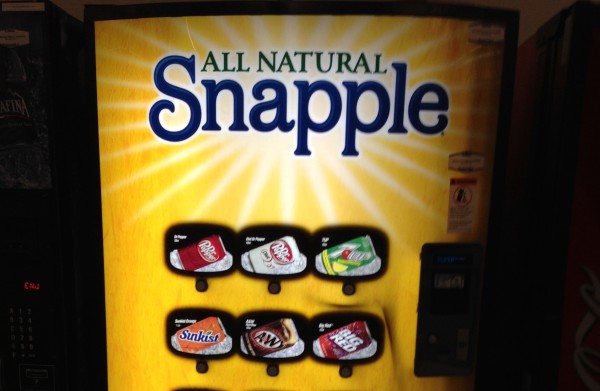
Marketing lessons are everywhere when you pay attention. In this video post, Mark tells the story of a Snapple vending machine that perfectly illustrates a fundamental marketing mistake: market to message match failure. The machine has a giant Snapple logo but sells Diet Coke, Sprite, and other non-Snapple products. The marketing message does not match the product being delivered.
What Is Market to Message Match?
Market to message match means that the expectation you set in your marketing aligns with what you actually deliver. When someone sees your Snapple logo and expects Snapple, they should get Snapple. When someone clicks your search result and expects information about a specific topic, they should find exactly that on your page.
How This Applies to SEO
In search engine optimization, market to message match shows up in two critical places: your page title and your meta description. These are the elements that appear in Google search results and determine whether someone clicks through to your site.
Getting to the first page of Google requires backlinks and technical optimization. But once you are there, you need to get people to click. That means writing compelling copy in your page title (the bold line in search results) and your description (the text beneath it).
The critical rule: whatever expectation your title and description set must match what visitors find on your page. If your title promises Snapple and your page delivers Diet Coke, visitors will bounce immediately. That bounce rate signals to Google that your page did not satisfy the searcher's intent, which can hurt your rankings over time.
How to Get Market to Message Match Right
- Match your page content to your title tag. If your title says “Best Running Shoes for Flat Feet,” the page should deliver exactly that analysis.
- Over-deliver on the promise. Do not just meet the expectation set by your title and description. Exceed it. Delight the visitor with more value than they expected.
- Drive bounce rates down. When your content matches your marketing message, visitors stay longer and engage more deeply, which improves your rankings and conversion rates.
What's Changed Since This Post
Mark published this in July 2014. The concept of market to message match has only become more important.
Google now explicitly evaluates search intent matching. The concept Mark describes here, ensuring that your page content matches what searchers expect, is now a core part of how Google evaluates pages. Google's algorithm improvements in understanding user intent mean that mismatched content is penalized more quickly and more severely than in 2014.
Core Web Vitals and user experience signals reinforce this principle. Google now tracks engagement metrics like bounce rate, time on page, and interaction patterns. Pages with poor market to message match naturally perform worse on these metrics, creating a double penalty: unhappy visitors and lower rankings.
Listen and Subscribe
Listen to Late Night Internet Marketing on Apple Podcasts or subscribe at latenightim.com/internet-marketing-podcast/.


These are a bit like the marketing messages we see in the UK.
Recently I drove into a shopping centre, and a big yellow sign in an electrical store caught my eye. One of the offers was for a half price, corner desk made of black glass.
On the picture it looked perfect for my home office, and at £99.99 down from £199.99 I thought I would go and get it.
When I got in the store, there was a big stack of them with the same sign overhanging them. Thoufgh this time, I saw the tiny writing at the bottom which read
*when purchased with any PC or laptop in store.
The writing was in a faint orange, small font on a yellow background. I went outside again, and looking at the window sign close up, I could now see the small print (where I couldn’t see it when parking up).
Talking of bounce rates in your video – any idea what i did next?
I bounced right outta there, never to return.
PS Mark.
Your comment set up is pretty annoying.
Because I don’t have a livefyre account (and have never heard of it before, or seen it on any of the blogs I have visited), I cannot put my real name (said name is already taken), and I cannot put my URL anywhere.
In other words, it’s not easy to comment on your site. I just want to comment, I don’t want to start signing up for services!
Just my 2 pennies worth…